Wear and sequencing
- Wear for the prescribed hours; the guide uses 22 hours a day as the target.
- Move to the next set on the clinician’s schedule and do not skip ahead.
- Soften a new aligner in warm water before seating when instructed.
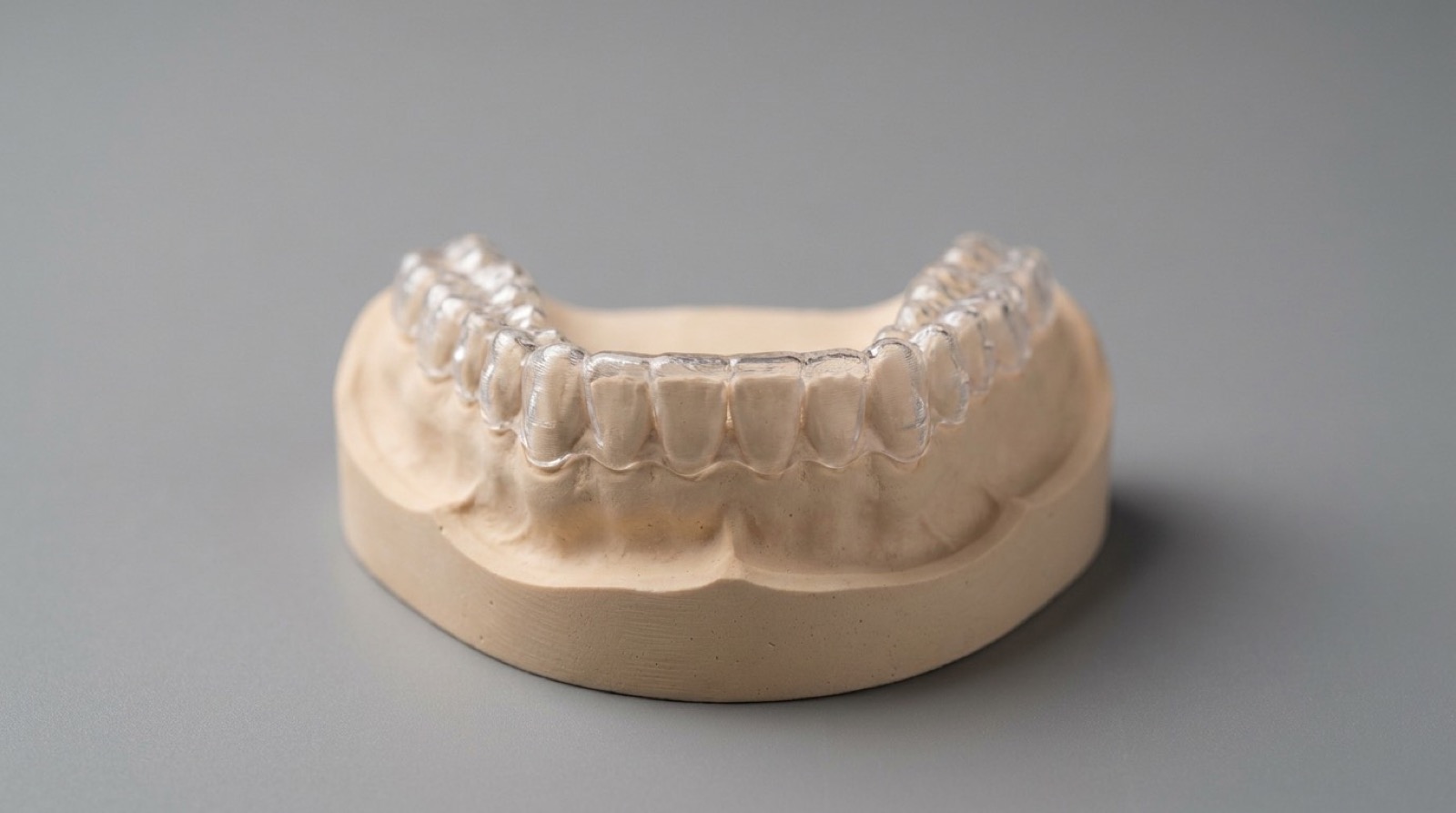
SmartAligners is a doctor-directed clear-aligner system built around Graphy Tera Harz Clear shape-memory resin. Every case is planned by an orthodontist, with production checkpointed for review after approval.
Thermoforming inherits whatever a stretched sheet leaves behind. Direct printing does not. The evidence and limits sit further down this page.
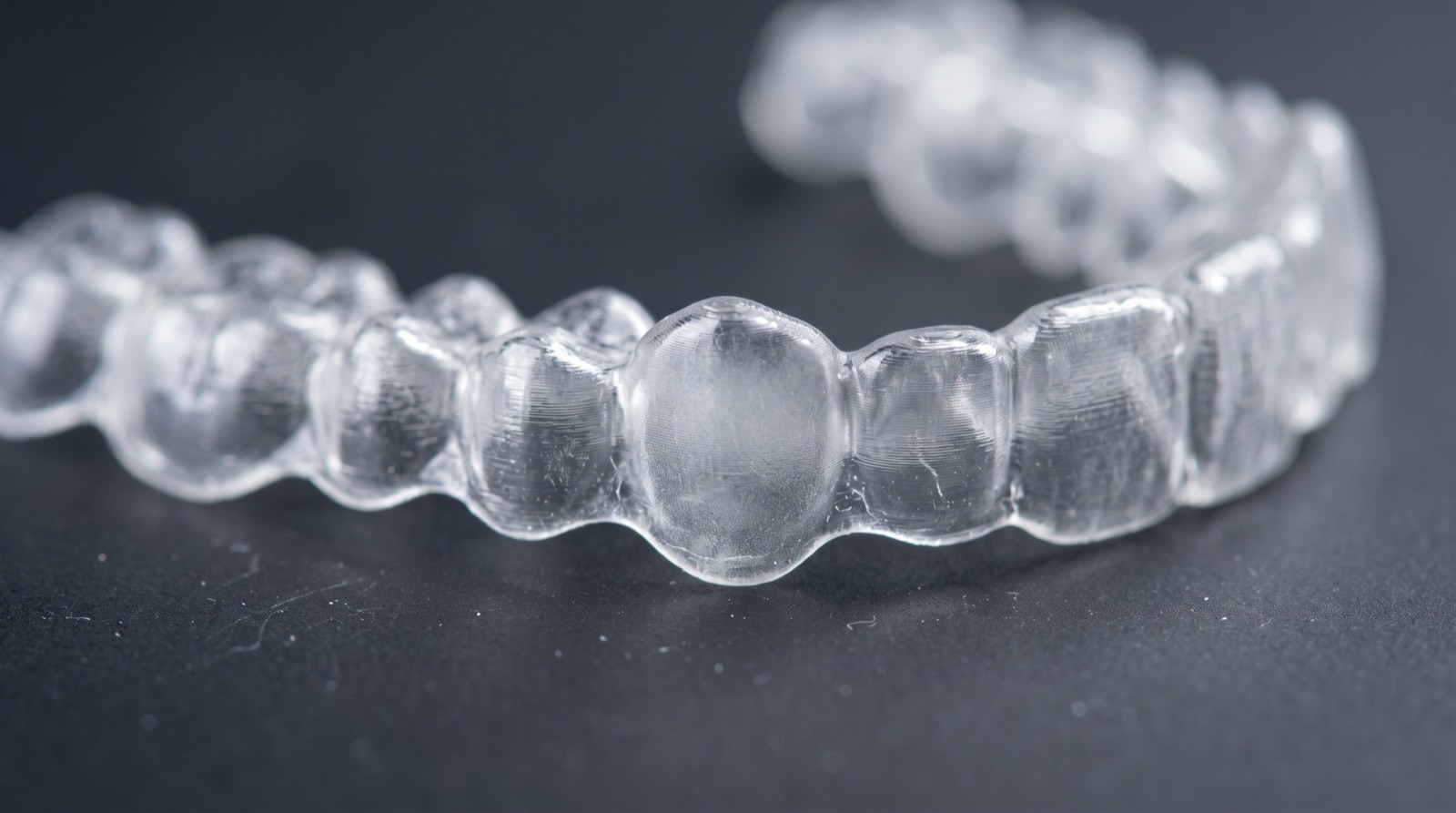
Smart Essential, Smart Complete and Smart Advanced are our plan levels. The guide describes up to 10, 20 and 30 stages respectively, with package ranges of roughly 2-3, 4-6 and 7-10 months. Diagnosis, staging, refinements and compliance still determine the prescribed duration.
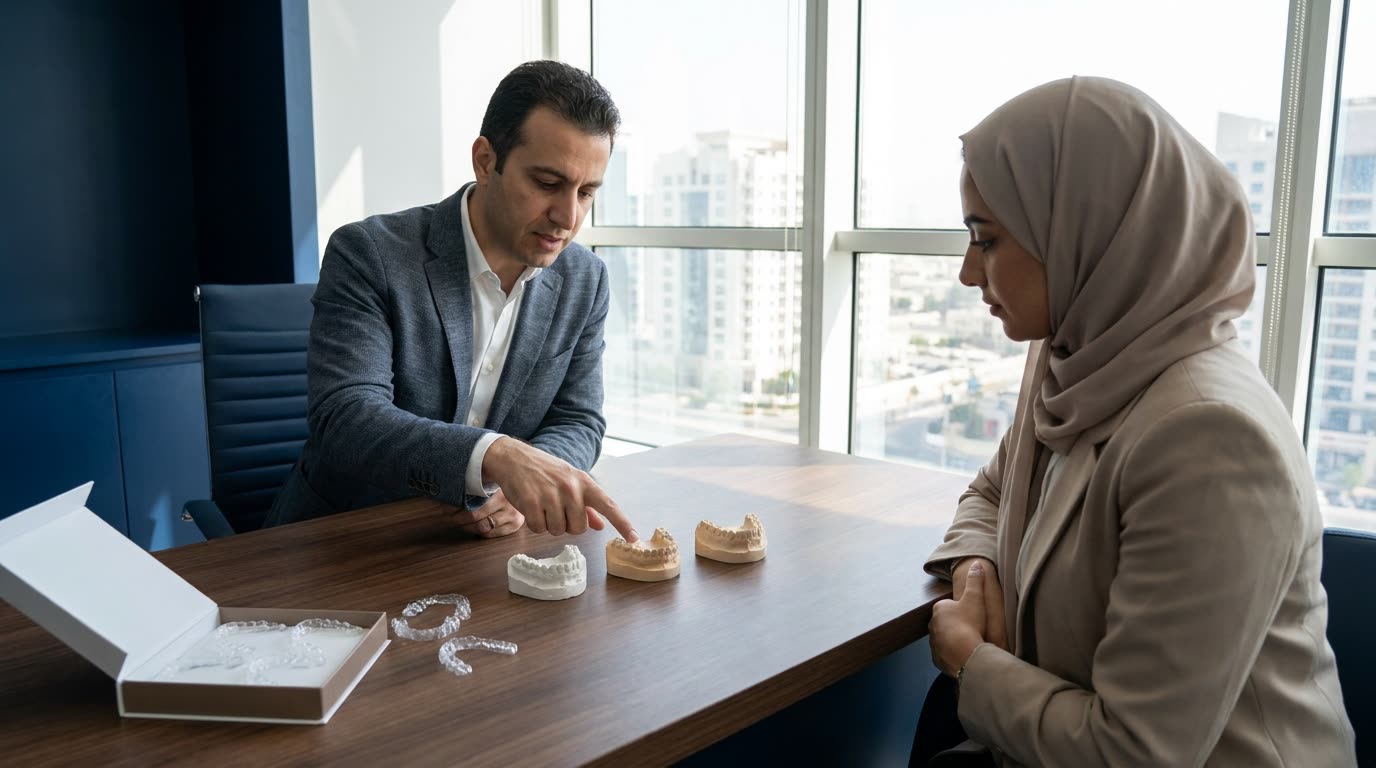
The treating clinician still owns diagnosis and review. Production starts only after approval.
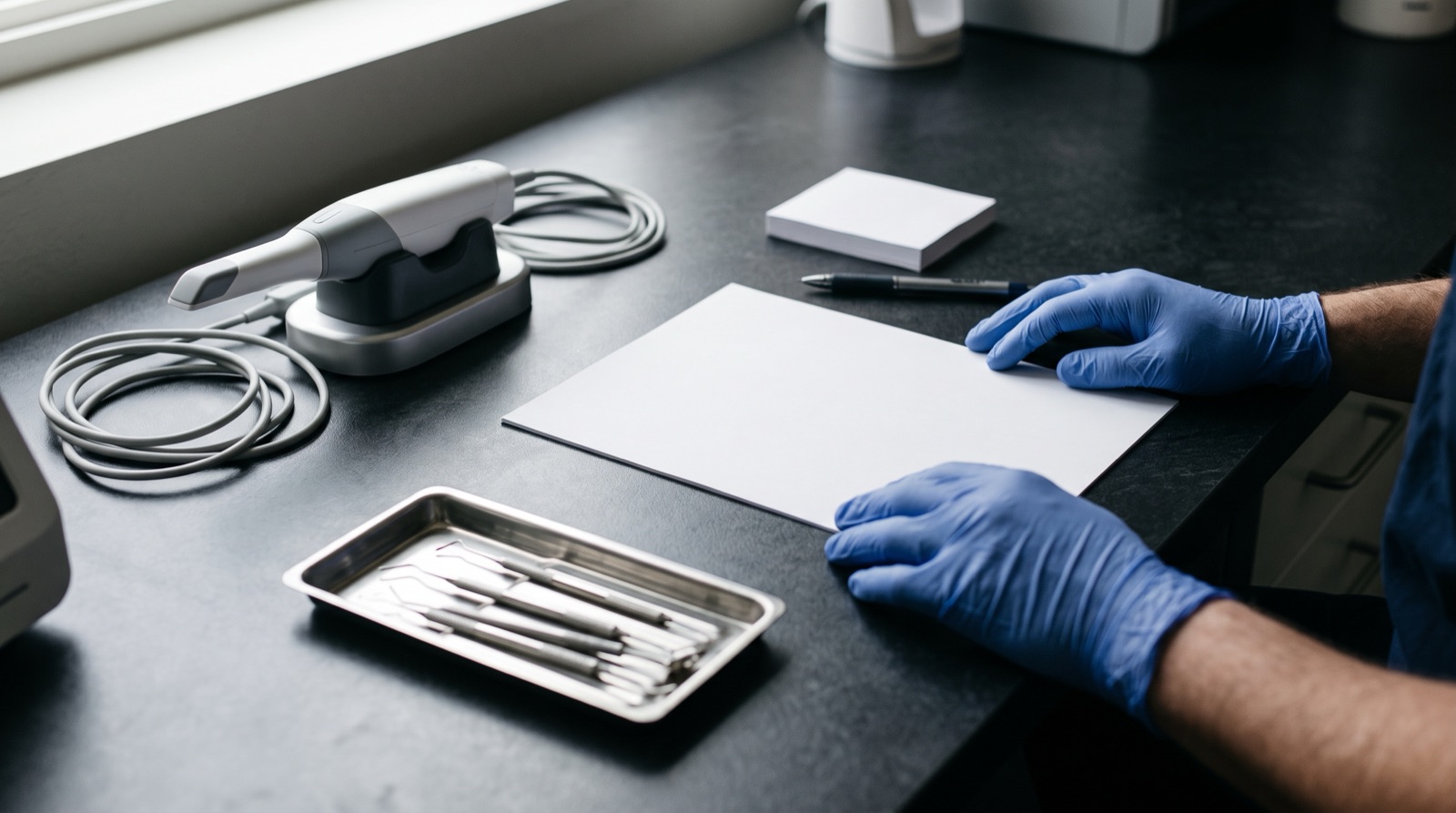
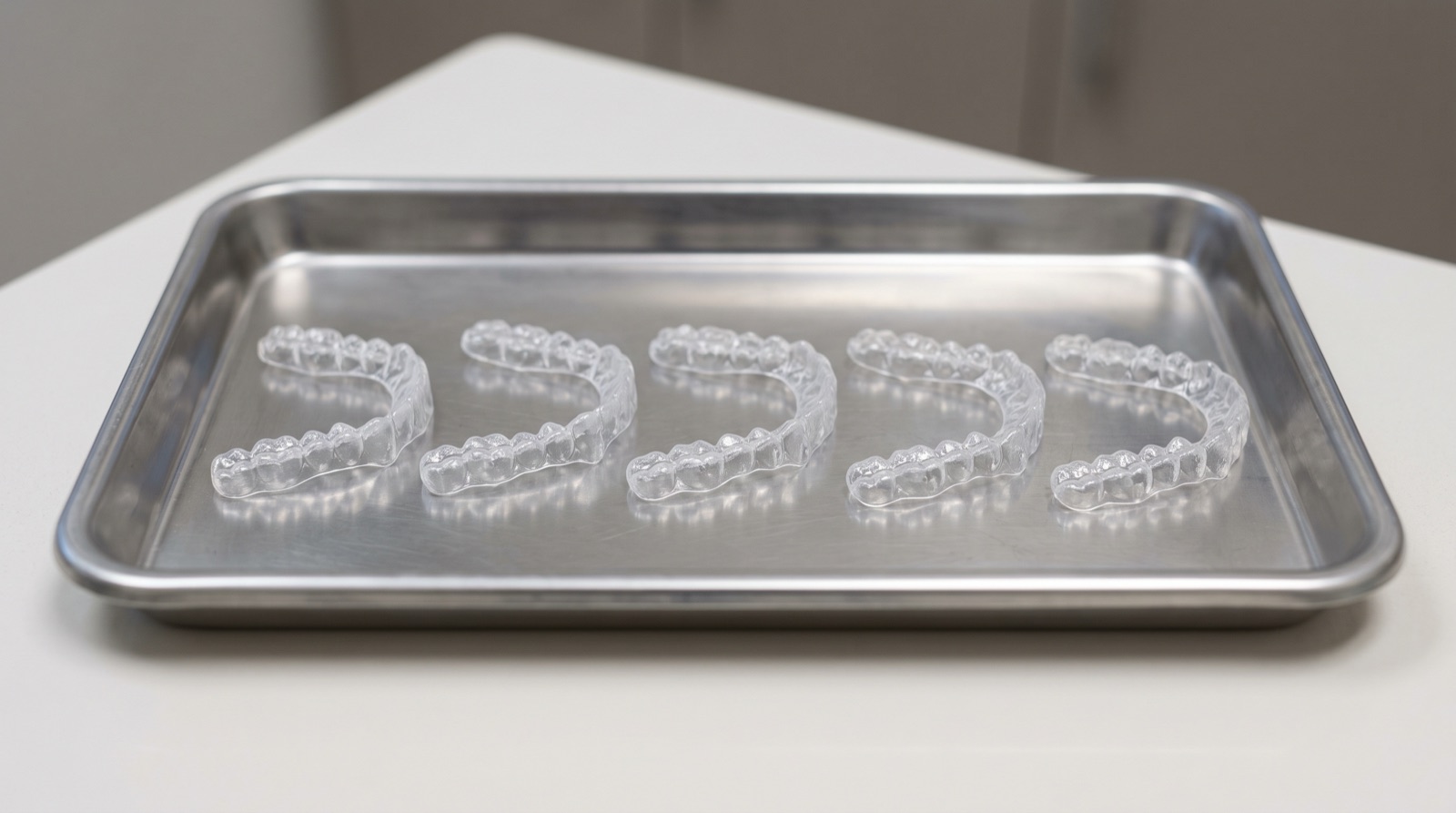
Digital dentition, checked for suitability.
Scan sent with prescription and comments.
A staged plan comes back for review.
Production starts once you approve it.
Finished appliances reach the clinic.
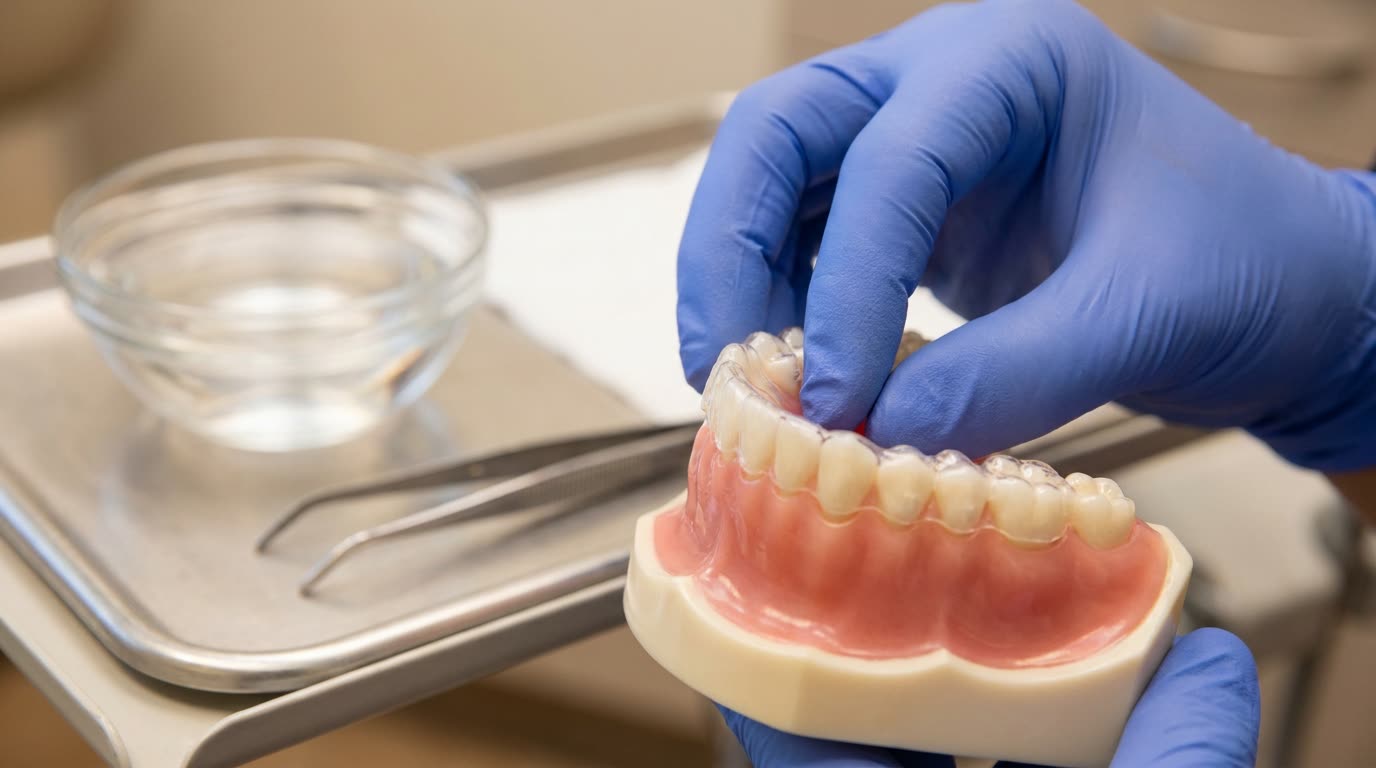
Soften the aligner in the approved warm-water protocol until temporarily flexible.
Guide the softened appliance straight onto the teeth.
Seat each tooth and seal the cheek- and tongue-side edges.
Allow the appliance to cool and firm while checking fit and high spots.

Upload the intraoral scan and prescription, review the orthodontist-led plan, approve it, and follow production checkpoints in one place.
The staged 3D plan is ready. Production does not start until you approve it.
Files, Messages, and Batches are clickable case views. Open Files first to check what has arrived.
Submitted notes lock once a case is in production. After that, changes are requested as a revision rather than edited silently.
Rotate, zoom and step through this synthetic case with the same 3D viewer used elsewhere on this site. It is a clearly illustrative demonstration, not the live per-patient staging simulator.
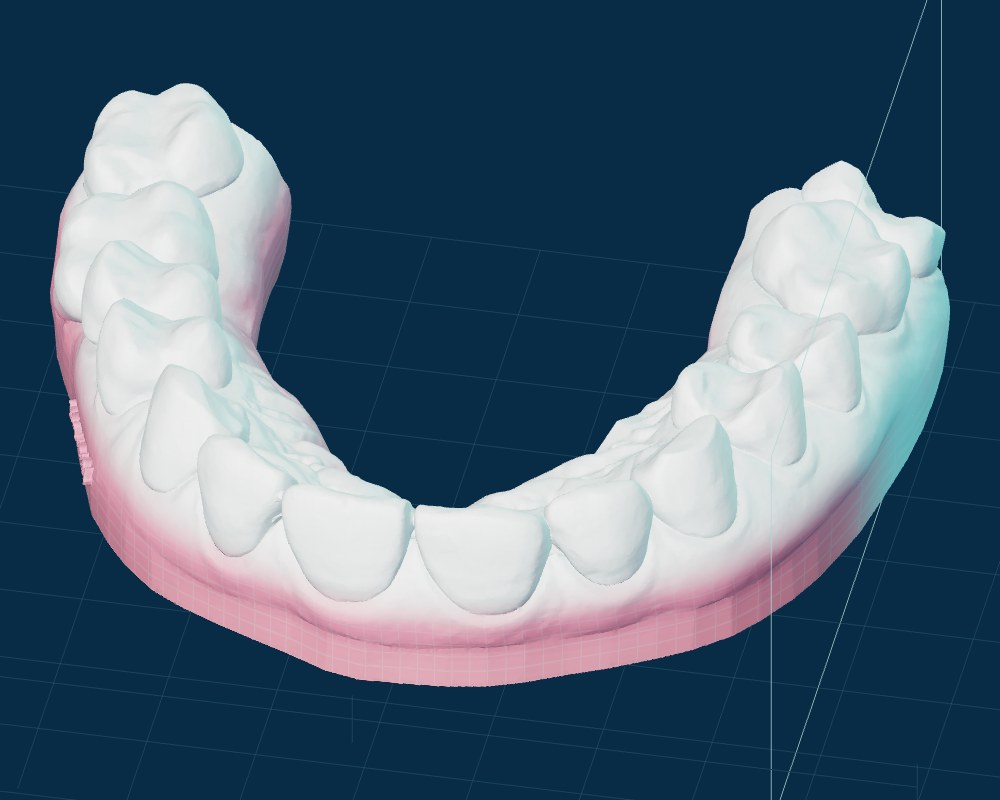
Files are grouped by clinical function rather than one general upload box. Each slot shows whether it has been received.
The portal keeps a case-scoped conversation with the lab and design team, plus a delivery history of system emails.
Production is tracked as numbered batches, so staging can be released and checked in groups.
SmartAligners can dispatch an intraoral scanner and certified clinical technician directly to your clinic in Dubai, Abu Dhabi, or Sharjah. In the portal this submits a dispatch request; here the form is shown as a capability and cannot be sent.
For your case discussion: these describe how the material behaves on a bench, not how a given tooth will move. They are useful for explaining how a printed appliance recovers toward its printed shape at mouth temperature. They are not a substitute for your own diagnosis, staging or review.
A thermoformed sheet is stretched to shape, so it starts to relax from the moment it is seated. Tera Harz is printed in its target geometry and keeps returning to it at mouth temperature. This is the measured difference.
| Elapsed | Bending angle | Recovery |
|---|---|---|
| 0 | 177.00 ± 1.44° | 0 |
| 10 s | 146.27 ± 3.92° | 17.36 ± 2.06% |
| 30 s | 107.23 ± 7.05° | 39.42 ± 3.90% |
| 1 min | 79.43 ± 6.45° | 55.12 ± 3.64% |
| 5 min | 31.53 ± 5.48° | 82.19 ± 3.09% |
| 10 min | 20.32 ± 5.49° | 88.52 ± 3.10% |
| 60 min | 6.90 ± 2.68° | 96.11 ± 1.50% |
Recovery ratio θinitial − θt θinitial × 100
The useful distinction is not that the polymer can change shape. It is that recovery continues in the temperature range where the aligner is actually worn.
Tera Harz Clear, the material SmartAligners are printed from, was submitted against the ISO 10993 battery for biological evaluation of medical devices. Laboratory report numbers are listed so a clinician can request the underlying certificates.
| Number | Test | Standard | Result | Report no. |
|---|---|---|---|---|
| 1 | Cytotoxicity Elution method | ISO 10993-5 | Non-cytotoxic to L-929 mouse fibroblast cells | BIO-GNT 1384 |
| 2 | Sensitization GPMT | ISO 10993-10 | Non-sensitizer to guinea pig skin | BIO-ATX 3190 |
| 3 | Irritation Acute oral mucosa | ISO 10993-10 | Oral mucosal irritation index concluded as zero | BIO-ATX 3191 |
| 4 | Intracutaneous reactivity Polar and non-polar extracts | ISO 10993-10 | Non-irritant to rabbit skin | BIO-ATX 3192 |
| 5 | Acute systemic toxicity IV and intraperitoneal, 50 mL/kg | ISO 10993-11 | No systemic toxicity observed | BIO-ATX 3193 |
| 6 | Subacute systemic toxicity Repeated administration | ISO 10993-11 | No gross or microscopic changes | BIO-CTX-606 |
| 7 | Subchronic systemic toxicity Repeated administration | ISO 10993-11 | No gross or microscopic changes | BIO-CTX 362 |
| 8 | Genotoxicity Bacterial reverse mutation | ISO 10993-3 | Non-mutagenic at 100% extract concentration | BIO-GNT 1385 |
| 9 | Genotoxicity In vitro chromosomal aberration | ISO 10993-3 | Non-clastogenic with and without metabolic activation | BIO-GNT 1386 |
Biocompatibility describes how the material behaves in contact with tissue. It is not a measure of treatment effectiveness, and it is not a prediction of any individual outcome. Source: Graphy shape-memory aligner science summary, safety section.
3D scan analysis reports greater trueness and precision for direct-printed aligners than the thermoformed comparison. A printed aligner is measured against the file it came from; a thermoformed one is measured against a sheet that was stretched over a model.
After 14 days in 37 °C water, the printed resins delivered 4.04 to 7.24 N at 1% strain, against 26.26 to 32.91 N for thermoformed sheets in the same test (Oyonarte et al., Scientific Reports 2026).
Shape-memory aligner cases are published in the peer-reviewed literature, including Schupp et al. in the Journal of Aligner Orthodontics. Protocols and outcomes vary by case; the papers are linked below rather than summarised into a claim.
Direct printing removes model printing, block-out, thermoforming and border trimming from the conventional workflow. It does not remove the need for disciplined post-processing and clinical QC.
Scan, diagnosis, staging and appliance design reviewed by the treating clinician.
Aligners printed from the approved digital appliance geometry.
Validated post-processing controls polymerization and finished material behaviour.
Supports, edges, clarity, fit and batch records checked before release.
Upper and lower arch photographs from one treated case, taken before treatment and at the end of the approved plan.


Office 303, Ahli House C, Al Nahda 2, Dubai. Monday-Saturday, 9:00 AM-6:00 PM.
SmartAligners coordinates local production through D4 after clinician approval of the digital plan. The laboratory workflow is designed around rapid UAE production targets for eligible cases, with staged 4-6 aligner batches available for progress checks when requested by the clinician.
More than a Lab. A partner in your smile.
SmartAligners main contact WhatsApp +971 52 671 1185 [email protected]
Every chart above is rebuilt from Graphy's characterisation data. If you would rather read the original figures, they are reproduced in full with the provenance stated.
Tell us about your clinic, team and interest in onboarding, clinical training or production. This partnership channel is separate from patient provider enquiries.
[email protected]The SmartAligners clinical team will reply using the contact details provided.